


Portable Thermal Night Vision Scope: Field Guide & Safety

Portable Infrared Thermal Imaging Night Vision Scope: What It Does, Where It Excels, and How to Use It Safely
A portable thermal scope makes heat differences visible when darkness, smoke, light brush, or glare make traditional optics struggle. Instead of relying on moonlight or a bright infrared illuminator, a thermal viewer translates infrared radiation into a high-contrast scene that can help you notice movement and confirm presence faster. Below is a practical guide to what a handheld or scope-style thermal viewer actually shows, which specs matter most, and how to handle it responsibly in real conditions.
What a Thermal Night Vision Scope Shows (and What It Doesn’t)
Thermal imaging detects infrared radiation (heat) and converts it into a visual scene; it does not rely on ambient light the way traditional night vision does. This is why thermal can remain useful on overcast nights, in deep shade, or around uneven lighting where glare or shadows can hide details.
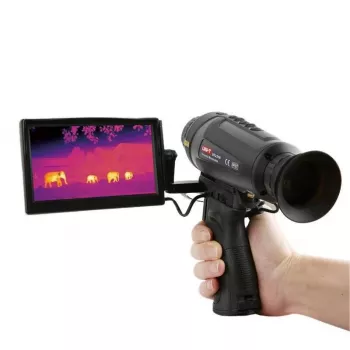
Warm targets—people, animals, recently running vehicles, sun-warmed surfaces—often stand out against cooler backgrounds. That contrast can make thermal excellent for initial detection and for tracking a moving “hot spot” through sparse vegetation.
Thermal also has limitations. It cannot “see through” solid objects; while thin materials can sometimes appear warmer, walls, dense glass, and most barriers still block line-of-sight. Weather matters too: fog, rain, and high humidity can reduce contrast and effective detection, and results vary with the target-to-background temperature difference.
Finally, thermal palettes (white hot, black hot, color modes) are visualization choices. They don’t change what the sensor detects, but they can make targets pop more clearly or reduce eye fatigue during longer scanning sessions.
Thermal vs. Digital Night Vision vs. Traditional Night Vision
| Feature | Thermal Imaging | Digital Night Vision | Image Intensifier Night Vision |
|---|---|---|---|
| Works in total darkness | Yes | Usually needs IR illuminator | Often yes, but improves with ambient light |
| Detects heat signatures | Yes | No | No |
| Performance in fog/rain | Can degrade (contrast drops) | Often degrades | Often degrades |
| Detail for identification | Moderate (shape/heat) | Good with illumination | Very good in favorable light |
| Common use cases | Detection and tracking | Observation and recording | Navigation and detailed recognition |
Key Performance Factors to Compare Before Buying
Specs can look impressive on a product page, but field performance is usually shaped by a handful of practical factors:
- Sensor resolution: Higher resolution typically improves target clarity and recognition at distance; balance that with budget and portability.
- Thermal sensitivity (NETD): Lower NETD can reveal subtle temperature differences, which helps in humid air or low-contrast scenes.
- Lens and optical magnification: Larger objective lenses can extend detection range but add weight; digital zoom trades clarity for tighter framing.
- Refresh rate: A higher refresh rate feels smoother while scanning and tracking moving targets.
- Detection vs. recognition vs. identification: Detection is noticing “something”; recognition is knowing the category; identification is confirming exact type. Choose based on what you truly need at your typical distances.
- Battery system: Runtime, charging method (USB-C vs. proprietary), and swappable batteries often matter more than peak specs on long outings.
- Ruggedness and environmental rating: Look for water resistance, operating temperature range, and recoil rating if it will ever be mounted.
- Recording and connectivity: On-device recording, app streaming, and storage can be useful for training, documentation, and sharing.
For deeper background on how thermal imaging works and why contrast changes with conditions, Teledyne FLIR’s overview is a helpful primer: https://www.flir.com/discover/thermal/.
Portable Use Cases Where Thermal Shines
- Wildlife observation: Spot animals without visible lights that may disturb behavior; keep distance and follow local regulations.
- Property and perimeter awareness: Quickly check dark corners, fence lines, and outbuildings for unexpected heat signatures.
- Search and rescue support: Thermal can help locate a person by heat contrast, especially against cooler terrain; always coordinate with proper authorities.
- Outdoor navigation and campsite checks: Confirm what’s moving near camp before approaching; avoid startling wildlife.
- Equipment checks: Identify overheating components in vehicles or generators (qualitative detection, not a replacement for calibrated inspection tools). NIST provides measurement context for thermography: https://www.nist.gov/.
When weather is the wildcard, remember that humidity, rain, and temperature swings can soften contrast. NOAA’s resources are useful for understanding changing conditions before heading out: https://www.noaa.gov/.
Setup Tips for Better Image Quality in the Field
Handling, Safety, and Responsible Use
Care, Storage, and Battery Practices
Product Options for Night and Outdoor Readiness
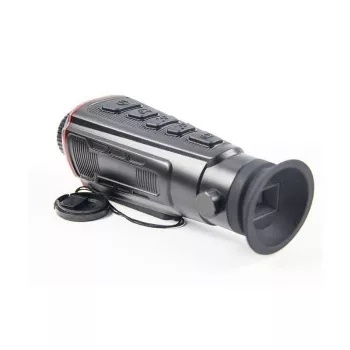
- Portable Infrared Thermal Imaging Night Vision Scope — designed for portable thermal viewing where heat contrast can reveal targets more clearly than standard optics.
- 3-4 Person Outdoor Tunnel Tent — a practical pairing for overnight trips where campsite checks and perimeter awareness matter.
At-a-Glance Checklist Before Checkout
| Check | Why it matters |
|---|---|
| Battery runtime and charging method | Determines how long it can stay in the field and how easily it can be topped up |
| Intended mounting style | Handheld vs. mounted use affects handling, stability, and safety |
| Weather resistance | Helps prevent downtime in rain, snow, or dusty environments |
| Return/warranty terms | Important for high-value optics and electronics |
FAQ
Can thermal imaging work in complete darkness?
Yes. Thermal detects heat rather than visible light, so it can function without moonlight or streetlights, though image clarity still depends on temperature contrast and weather.
Does a thermal scope see through walls or windows?
Generally no. Walls and most solid barriers block line-of-sight, and typical glass often blocks long-wave infrared, while reflections near windows can be misleading.
What affects thermal detection range the most in real use?
Sensor resolution and sensitivity, lens size, target size, and weather (humidity, rain, fog) all matter, along with how different the target’s temperature is from the background.












Leave a comment