


Pack Light Every Time: Minimalist Digital Packing Planner
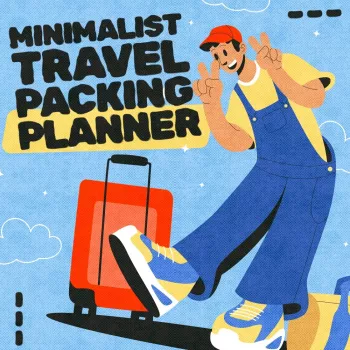
Minimalist Travel Packing Planner: A Digital Guide for Light, Smart, Stress-Free Trips
Packing light is easier when every item has a purpose. A minimalist packing plan reduces decision fatigue, prevents overpacking, and makes it simpler to stay organized from departure to return. This digital packing planner is designed to help build repeatable, trip-ready lists that match the destination, activities, and laundry access—without the last-minute scramble.
Why minimalist packing works (and why it feels calmer)
Minimalist packing isn’t about going without—it’s about choosing items that earn their space. When the bag is lighter and the list is intentional, the entire travel experience tends to run smoother.
- Fewer items means fewer choices each morning and less time spent searching for essentials.
- Lighter bags reduce physical strain and make airports, stairs, and public transit easier.
- A focused wardrobe improves outfit mixing: repeatable combinations instead of single-use pieces.
- Better organization lowers the chance of forgetting core items like chargers, meds, or documents.
What the Minimalist Travel Packing Planner helps accomplish
A digital planner is most useful when it turns “mental clutter” into a system you can reuse. Instead of rebuilding a checklist from scratch every time, you start from a proven template and customize only what changes.
- Turn a messy mental list into a clear, reusable packing system.
- Separate must-haves from nice-to-haves to prevent “just in case” overload.
- Plan by category (clothing, toiletries, tech, documents) so nothing essential gets missed.
- Adjust quickly for trip length, weather shifts, and activity-heavy itineraries.
- Support carry-on-only travel with smarter limits and intentional duplicates.
If you want a ready-to-use template, the Minimalist Travel Packing Planner (Digital Packing Guide) is built to be saved, duplicated, and reused—so each trip feels like a quick update, not a full planning project.
How to use a digital packing planner in 10 minutes
Minimalist packing works best when you decide what the trip requires before you decide what you feel like bringing. A quick planning pass keeps packing grounded in reality.
- Start with destination basics: climate, dress code, and key activities (work, hiking, beach, events).
- Choose a laundry plan: no laundry, sink-wash, or machine access—this sets clothing quantity.
- Build outfits first: then pack pieces that serve multiple outfits (tops that match all bottoms).
- Set category caps: example: 2 shoes total; 1 jacket; 1 “nice” outfit—simple limits prevent spiraling.
- Run a final scan: check for single points of failure (phone charger, glasses/contacts, medication).
For flights, verify your liquids and gel items before you zip the bag. The TSA’s current guidance is the easiest baseline for carry-on planning: TSA: Liquids Rule.
A minimalist packing framework that adapts to any trip
Instead of packing “more,” pack in layers and modules. That way, you can scale up or down without rethinking everything.
- Core capsule: neutral base layers + one warmer layer + one weather layer.
- The 1-2-3 rule for extras: 1 dressy option, 2 comfort items, 3 activity-specific items max.
- Toiletries simplified: decant favorites, skip duplicates, and rely on hotel/market backups when practical.
- Tech only when it earns its weight: one charger setup, one power bank, and one adapter (if needed).
- Space management: packing cubes or pouches by function (sleep, day, gym/swim) for quick access.
Minimalist packing categories and smart limits
| Category | Carry-on-friendly target | Notes |
|---|---|---|
| Clothing | 3–5 tops, 2–3 bottoms, 1 mid-layer | Aim for mix-and-match; prioritize quick-dry fabrics |
| Shoes | 1–2 pairs | Wear the bulkiest pair in transit |
| Outerwear | 1 jacket + 1 compact umbrella (optional) | Choose one that handles wind/rain |
| Toiletries | One small kit | Follow liquid limits; consider solid toiletries |
| Tech | Phone + charger + earbuds + power bank | Add laptop/tablet only if required |
| Documents | ID/passport + copies + confirmations | Keep digital + paper backup for key items |
Packing for different travel styles without starting over
If your trips include serious outdoor nights, it can help to plan around one major “bulky item” and then keep everything else streamlined. For group camping setups, the 3-4 Person Outdoor Tunnel Tent is the kind of anchor item that makes minimalist planning even more useful—because the rest of the bag has to stay disciplined.
Avoiding the most common overpacking traps
What’s included and who it’s best for
And if you like bringing something lightweight that improves the trip itself (not just logistics), the Meaningful Conversation Starter Guide (Printable) is an easy add-on—no bulk, no cords, and it turns downtime into connection.
For international travel, a quick pre-trip check of health and entry guidance can prevent avoidable surprises. Use authoritative sources like CDC: Travelers’ Health and U.S. Department of State: International Travel to confirm updates before you finalize your list.
Quick checklist: last 24 hours before departure
24-hour packing planner checklist
| Task | When | Done |
|---|---|---|
| Confirm itinerary + addresses | Night before | □ |
| Charge devices + download offline items | Night before | □ |
| Pack toiletries within liquid limits | Night before | □ |
| Set travel outfit + essentials by the door | Night before | □ |
| Final sweep: meds, glasses, keys, wallet | Morning of | □ |
FAQ
How many outfits are enough for a 7-day trip when packing light?
Plan a small capsule with repeatable combinations and rely on laundry access. For many trips, 3–5 tops, 2–3 bottoms, and a couple of layers is enough when you rotate outfits and refresh with clean base layers.
Is a digital packing planner useful if travel plans change often?
Yes—save a base template and duplicate it for each trip. Then you only adjust what changes (weather, activities, dress code, and your category limits) instead of rebuilding a list every time.
What should always go in a personal item bag?
Carry essentials that prevent a trip from unraveling if your main bag is delayed: documents, phone and charger, medication, and one warm layer. Add one small hygiene backup and any valuables or first-night necessities.
Recommended for you

12L Air Fryer with Viewing Window for Family Meals
Sep 14, 2026












Leave a comment