


Toddler Nightmares: What to Do & Bedtime Fixes That Help
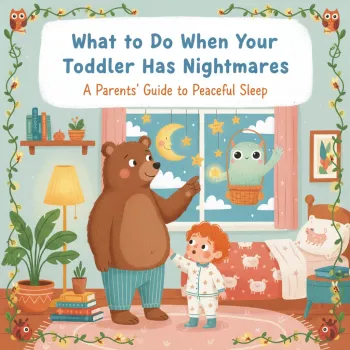
Nightmares can feel enormous and completely real for toddlers. When a little one wakes up crying, shaky, or begging for reassurance, it can also leave parents running on fumes. The goal isn’t to “talk them out of it” at 2 a.m.—it’s to respond in a calm, repeatable way that helps your child feel safe now, while gradually reducing how often scary dreams disrupt sleep.
Below are practical steps for the moment your toddler wakes, simple phrases that work (and common ones that backfire), plus daytime and bedtime adjustments that make nighttime fears less likely over time.
Nightmares vs. night terrors: why the difference matters
Before changing routines, it helps to identify what you’re dealing with. Nightmares and night terrors can look similar at first, but they call for different responses.
- Nightmares usually happen in the second half of the night. Your toddler wakes up scared, wants you, can often be comforted, and may remember parts of the dream.
- Night terrors often happen earlier in the night. A child may scream, look awake, seem panicked, and be inconsolable—and typically won’t remember it in the morning.
- A nightmare calls for reassurance and re-settling. A night terror calls for keeping your child safe and waiting it out with minimal stimulation.
- Track timing, behaviors, and recall for a few nights to clarify what’s happening before you overhaul bedtime.
For additional background, see resources from American Academy of Pediatrics (HealthyChildren.org) and the National Sleep Foundation.
What to do in the moment: a calm, repeatable response plan
When your toddler calls out, your nervous system sets the tone. The more predictable and low-key your response, the faster their body can settle.
- Pause before entering: take one slow breath so your first words and body language communicate safety.
- Use a simple script: “You’re safe. I’m here. That was a scary dream. Your body is okay.”
- Keep lights low and voices quiet; avoid bright overhead lighting that fully wakes the brain.
- Offer brief comfort (hug, back rub, hand-hold), then guide back to bed with a predictable mini-routine.
- If they want to talk, listen for 1–2 minutes, label the feeling, then shift to coping: “Let’s help your body feel calm again.”
- Avoid long discussions, screens, snacks, or moving to the parents’ bed as the default if the goal is fewer repeat wake-ups.
- If the dream is recurring, acknowledge it without reinforcing fear: “Dreams can feel real, but they can’t hurt you.”
Quick actions that soothe without fully waking
| Do | Why it helps | Try it like this |
|---|---|---|
| Name the feeling | Reduces panic and builds emotional literacy | “That scared you.” |
| Ground in the present | Re-orients to safety now | “You’re in your bed. I’m right here.” |
| Give a simple coping tool | Creates a predictable pattern the child can learn | “Smell the flower… blow the candle.” (2–3 breaths) |
| Return to routine | Teaches the body what happens next | Sip of water, quick cuddle, tuck-in, goodnight phrase |
What to say (and what to avoid) when a toddler is scared
At night, toddlers aren’t looking for logic—they’re looking for safety. The most effective language is short, steady, and confident.
- Say: “It’s okay to feel scared,” “You’re safe,” “I’ll stay for two minutes while your body calms down.”
- Avoid: “There’s nothing to be scared of.” It can feel dismissive and intensify protest.
- Avoid detailed questioning (“What did you see? Was it in the closet?”) that can strengthen mental images.
- Use choices with boundaries: “Do you want a hug or a hand-hold?” rather than open-ended negotiations.
- End with a consistent phrase and exit plan: “One more tuck-in, then I’ll check on you in five minutes.”
Bedtime routine adjustments that reduce nightmares over time
Comfort objects, night lights, and “monster checks”: using them without increasing fear
When nightmares become frequent: patterns, triggers, and when to ask for help
- Track for 1–2 weeks: bedtime, wake time, nightmare timing, naps, screen time, new stressors, and illness.
- Common triggers: overtiredness, irregular schedules, fever/illness, major routine changes, and scary media exposure.
- Seek professional guidance if nightmares are very frequent, cause significant daytime anxiety, include trauma themes, or persist despite routine changes.
- Talk with a pediatrician if you notice snoring, gasping, or very restless sleep; disrupted breathing can fragment sleep.
- If your child sleepwalks or has night terrors, focus on safety (gates, locked doors, clear floor) and avoid waking during episodes. For an overview, see the NHS guidance on night terrors in children.
A structured guide for parents who want step-by-step bedtime solutions
- For a gentle, repeatable approach with scripts and checklists, see: What to Do When Your Toddler Has Nightmares | Ebook Guide for Parents | Practical Comforting Tips & Bedtime Solutions.
- If daytime connection has been thin lately (a common trigger for nighttime clinginess), a simple prompt resource can help you build more “filled-up” moments before bed: Meaningful Conversation Starter Guide | Printable Guide for Dating, Friendship & Networking | Deep Questions & Prompt Examples.
FAQ
How long should a parent stay after a toddler wakes from a nightmare?
Stay just long enough to help your toddler’s body settle—often about 1–5 minutes. Use the same calming script and a short routine, then leave with a predictable plan (like a goodnight phrase and a quick check-in) to avoid creating a new sleep association.
Do night lights help toddlers with nightmares?
They can, especially a dim, warm light that reduces fear of darkness without overstimulating. Pair the light with a brief reassurance routine rather than repeated checking around the room.
When are nightmares a sign of something more serious?
Consider extra support if nightmares are frequent and intense, create persistent daytime anxiety, follow traumatic events, or come with big changes in behavior. It’s also worth talking to a pediatrician if you notice snoring, gasping, or very restless sleep.














Leave a comment