


152/1900 GoTo Telescope: Setup, Alignment & Views

A 152/1900 telescope paired with automatic star search is built for observers who want high-magnification lunar and planetary views without spending the whole night star-hopping. The specs favor sharp, close-up observing, while GoTo-style pointing and tracking make it easier to return to targets, share the view, and keep objects centered at higher power. Below is what those numbers mean, how automatic star search behaves in real use, what’s realistic from typical skies, and how to set up the system for smoother tracking and better results.
What a 152/1900 optical system means for viewing
A 152 mm (6-inch class) aperture gathers enough light to make the Moon and planets look bright and detailed, while also pulling in many brighter deep-sky objects. Paired with a 1900 mm focal length, the telescope naturally leans toward higher magnification with common eyepieces—great for fine structure on bright targets and for splitting double stars.
The tradeoff is field of view: longer focal lengths tend to show a smaller slice of sky at a given eyepiece focal length. Wide nebulae and large star fields may require a low-power eyepiece, and some sprawling objects simply won’t fit into one view. Also, the atmosphere often sets the real limit on magnification; on unsteady nights, extra power mostly enlarges blur. On steady nights, the same telescope can feel like it “levels up” dramatically.
Quick reference: how aperture and focal length affect the experience
| Spec | What it influences | What to expect in practice |
|---|---|---|
| 152 mm aperture | Light gathering & resolution | Sharper lunar/planetary detail; brighter views of many Messier objects |
| 1900 mm focal length | Magnification & field of view | Easy high power with moderate eyepieces; smaller true field |
| Long focal ratio (implied) | Contrast & tolerance | Often forgiving with eyepieces; strong performance on bright targets |
| Mount & tracking (with GoTo) | Comfort & time at the eyepiece | Targets stay centered longer; easier sharing with family/friends |
Automatic star search: what it does (and what it still needs from the user)
Automatic star search (commonly called GoTo) combines a hand controller database with motorized pointing. After alignment, you pick an object and the mount slews to it. For a long-focal-length system, this is especially helpful because the field of view is tighter and manual “hop-by-hop” finding can be slower.
Tracking is the second benefit: once an object is centered, the mount follows it as Earth rotates. That means less constant nudging at high magnification, more time seeing fleeting moments of sharpness, and less frustration when showing Saturn to a line of guests.
However, GoTo is only as good as the information you give it. Correct time, date, time zone, daylight saving setting, and location matter. Small errors that might be tolerable on a wide-field setup can translate into noticeable pointing offsets at 1900 mm. Most importantly, alignment quality is the make-or-break factor: careful star centering consistently outperforms rushing.
Setup and alignment checklist for reliable pointing
What can realistically be seen from different skies
For planning and target ideas, authoritative observing resources like Sky & Telescope observing guides and the NASA Solar System Exploration site help set realistic goals by season and object type. If light pollution is the main challenge, the International Dark-Sky Association offers practical guidance on finding darker locations and understanding skyglow.
Choosing eyepieces and accessories for a 1900 mm focal length
Care, storage, and transport basics
Product snapshot: High-Definition 152/1900 Astronomical Telescope with Automatic Star Search
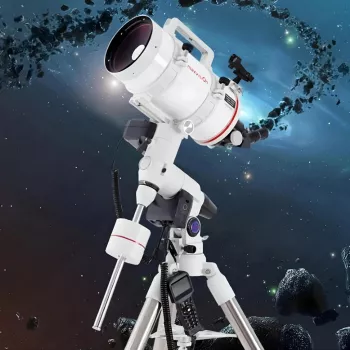
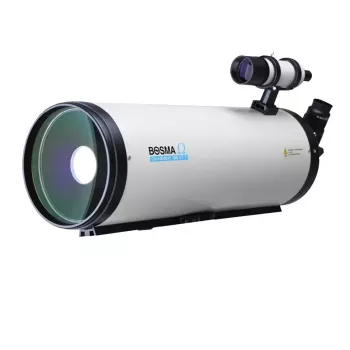
If the goal is high-magnification observing with guided pointing and tracking, the High-Definition 152/1900 Astronomical Telescope with Automatic Star Search is designed around a 152 mm aperture and 1900 mm focal length. After alignment, automatic star search helps locate and track targets—especially useful when you want quick access to the Moon, Jupiter, Saturn, and brighter deep-sky objects without extended manual searching.
Listing details
| Item | Value |
|---|---|
| Name | High-Definition 152/1900 Astronomical Telescope with Automatic Star Search |
| Price | 3650.49 USD |
| Availability | In stock |
| Product page | View product |
Useful add-ons for nights under the stars
For darker-sky trips or comfortable backyard sessions, a few practical items can make the experience smoother. For travel-friendly shelter at star parties or remote observing sites, consider the 3-4 Person Outdoor Tunnel Tent. And if observing is often a group activity, the Meaningful Conversation Starter Guide can be a simple way to keep the night social while you wait for clouds to pass or the telescope to cool.
FAQ
Does automatic star search work without alignment?
No—GoTo pointing depends on an initial alignment plus correct time and location data to map the sky. Without alignment, the mount can still move and track, but target pointing will be unreliable, especially at a long focal length.
What can a 152 mm telescope show on Jupiter and Saturn?
Under good seeing and after the telescope cools to outdoor temperature, Jupiter commonly shows its main cloud belts and sometimes the Great Red Spot, while Saturn’s rings are prominent and the Cassini Division can appear when conditions allow. Several moons around both planets are often visible as pinpoint stars.
Is a long focal length telescope good for deep-sky objects?
It can be excellent for brighter clusters and smaller deep-sky targets, including many planetary nebulae, because higher magnification helps separate detail. Very large objects may not fit in one view, so lower-power eyepieces and darker skies become more important.














Leave a comment