

Anxiety Relief Bundle: 10-Minute 4-Step Calm Routine

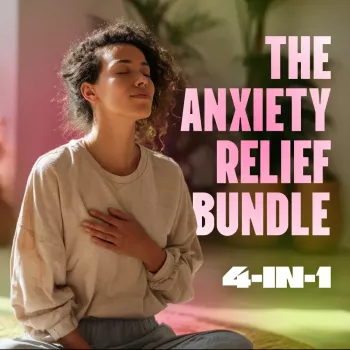
The Anxiety Relief Bundle: A Path to Calm — a simple 4-part routine for steadier days
Some days anxiety shows up loud and fast; other days it hums in the background and makes everything feel heavier than it needs to be. Our Anxiety Relief Bundle: A Path to Calm is built for the moments when “just relax” isn’t helpful—and what’s needed instead is a clear, repeatable routine. This 4-in-1 bundle combines mindfulness exercises, positive-thinking prompts, a printable checklist, and a course outline so calming skills don’t stay abstract. Everything is designed to fit into small, realistic pockets of time, then be repeated until it starts to feel natural.
What this bundle is (and what it’s for)
Think of this bundle as a practical system, not a one-off worksheet you skim once and forget. Our team built it to help you move from “I know I should do something” to “I have a plan I can follow.”
- A structured set of tools that turns calming practices into a routine: learn a skill, try it, track it, repeat it.
- Designed to reduce spiraling by giving your mind something specific to do—especially during stress spikes.
- Meant to support everyday anxiety management alongside healthy habits and professional care when needed.
- Useful for beginners and for anyone who knows the basics but wants consistency and follow-through.
If you want the full set, you can start here: The Anxiety Relief Bundle: A Path to Calm (4-in-1 Bundle).
Inside the 4-in-1 bundle: how each piece supports calm
Anxiety often feels like it’s everywhere—body sensations, thoughts, habits, sleep. This bundle intentionally covers multiple angles so you’re not relying on a single tactic on every kind of day.
- Mindfulness exercises: quick practices to anchor attention in the present and soften the stress response.
- Positive thinking: prompts and reframes that reduce catastrophizing and build a steadier internal voice.
- Printable checklist: a simple way to track what helps, notice patterns, and stay consistent on harder days.
- Course outline: a step-by-step path that removes guesswork—so progress isn’t dependent on motivation alone.
| Component | What it supports | Best time to use | A simple way to start |
|---|---|---|---|
| Mindfulness exercises | Grounding, nervous-system calming, present-moment focus | Morning, midday reset, or during a spike | Pick one exercise and repeat it daily for 7 days |
| Positive-thinking prompts | Healthier self-talk, reduced rumination, more balanced perspective | After a trigger, before bed, or during planning | Choose one prompt and write 3 sentences—no perfection required |
| Printable checklist | Consistency, habit-building, noticing what works | Daily (2 minutes) or weekly review | Check off only one action per day to build momentum |
| Course outline | Structure, progression, confidence through repetition | Weekly rhythm (15–30 minutes) | Follow the next step only—avoid “catching up” pressure |
A gentle routine you can repeat (10 minutes a day)
The easiest way to get value from this bundle is to use the same mini-sequence daily. Not because anxiety needs “more work,” but because repetition reduces decision fatigue—especially on the days your brain wants to argue with everything.
- Minute 1–2: Use a grounding mindfulness exercise to settle the body (breath, senses, or a brief scan).
- Minute 3–6: Use one positive-thinking prompt to name the anxious story and rewrite it into something more balanced.
- Minute 7–8: Mark the printable checklist (what you used + a quick note like “worked a little” or “worked a lot”).
- Minute 9–10: Preview the next step from the course outline so tomorrow feels easier.
- On high-stress days: shorten everything—consistency matters more than duration.
If you want a “2-minute version” for emergencies, do one grounding exercise, write one line that starts with “A more balanced take is…,” and mark a single check on the tracker later.
Using the bundle for common anxiety moments
Anxiety doesn’t show up the same way every time, so here’s how our team recommends using the pieces without overthinking it.
When thoughts race at night
Before a difficult conversation
During a trigger in public
When anxiety feels constant
How to make this feel sustainable (not like another task)
For a helpful overview of anxiety disorders and support options, the National Institute of Mental Health (NIMH) is a solid starting point. For how mindfulness supports stress and attention, see the American Psychological Association.
When a supplement question comes up (and how this bundle fits)
If you want an evidence-informed overview of complementary approaches for anxiety, the National Center for Complementary and Integrative Health (NCCIH) is a reliable resource.
Other supportive resources you might like
Anxiety can feel isolating, and a gentle conversation can sometimes lower the temperature in your nervous system. If you want prompts that make it easier to connect (without forcing small talk), our team also offers the Meaningful Conversation Starter Guide (Printable).
FAQ
What is the best anxiety relief supplement?
There isn’t one “best” supplement for everyone, because needs and safety considerations vary based on your health history, medications, and symptoms. Our bundle focuses on non-supplement, skill-based support you can start using right away; if you’re considering supplements, a clinician or pharmacist can help you choose safely.
Is this bundle meant for daily use or only during anxious moments?
Both: daily use builds the habit so the tools feel familiar, and short versions work well during spikes. If you’re not sure where to start, use the 10-minute routine most days and the 2-minute version when you’re maxed out.
How long does it take to notice a difference?
Some people feel a shift after a single grounding session, especially when the body settles first. More lasting change usually comes from consistent practice over a few weeks, and the checklist helps you spot small improvements you might otherwise miss.













Leave a comment