

Chandelier Sizing by Height & Scale: Room-by-Room Guide
How to Choose a Chandelier by Height and Scale: A Room-by-Room Checklist
A chandelier should feel intentional—not too small to matter, not so large it crowds the room. The quickest way to land the “right” look is to choose by scale (diameter and visual weight) and then set the height (hanging length and clearance). Our team uses the same simple order every time: measure the zone, pick a shape that matches what’s beneath it, confirm the chandelier has the right presence for the ceiling and sightlines, then fine-tune hanging height. For more guidance, see Lighting Showrooms – Ratings and Reviews – National.
Start with scale: diameter, shape, and visual weight
Begin with the footprint. Measure the room length and width, then decide whether the chandelier is the focal point or a supporting layer within a larger lighting plan. From there, use “visual weight” cues—not just inches—to predict how large a fixture will read once it’s up. For further reading, see LAPADA Guide to Antique Chandeliers.
- Measure the footprint first (length × width), then decide if the chandelier is the main focal point or a complementary layer.
- Read visual weight: more arms, larger shades, dense crystal, and reflective finishes all make a chandelier feel bigger.
- Match shape to what’s below: round fixtures suit round tables and centered seating; linear/oval fixtures fit rectangular tables and long islands.
- In open-plan layouts, size to the zone (the dining area or seating group), not the entire open room.
- For tall ceilings or big windows, choose more presence (multi-tier, branching silhouettes, thicker frames) so the fixture doesn’t disappear.
Quick scale checkpoints by space
| Space | What to size to | Scale goal | Common mistake to avoid |
|---|---|---|---|
| Dining room | Table size and room width | Chandelier reads as the centerpiece over the table | Choosing based only on room size and ignoring table proportions |
| Foyer/entry | Ceiling height and sightlines from doors/stairs | Fixture fills vertical space without blocking views | Hanging too low so it feels in the way at the entry |
| Bedroom | Bed width and walking paths | Soft focal point centered in the room or over the bed zone | Oversizing so it dominates the bed and nightstands |
| Living room | Seating group footprint | Fixture anchors the conversation area | Sizing to the whole room when furniture is arranged in a smaller zone |
Set the height: hang length, clearance, and ceiling type
Once the scale feels right, height locks in comfort. The goal is consistent: keep the lowest point out of natural sightlines and walk paths, while still letting the fixture “own” the zone it’s lighting.
- Dining tables: prioritize clearance above the tabletop so conversation and serving stay comfortable.
- Open walkways and foyers: prioritize head clearance and avoid placing the lowest point where people naturally pass through.
- Sloped ceilings: plan on adjustability (chain/rod) and position the canopy so the chandelier hangs plumb.
- Two-story spaces: check the view from both levels; a height that works below can feel off from above.
- Mock it up first: tape a paper circle to the ceiling for diameter and use string to test hanging length before committing.
Dining room sizing: make the chandelier fit the table, not the other way around
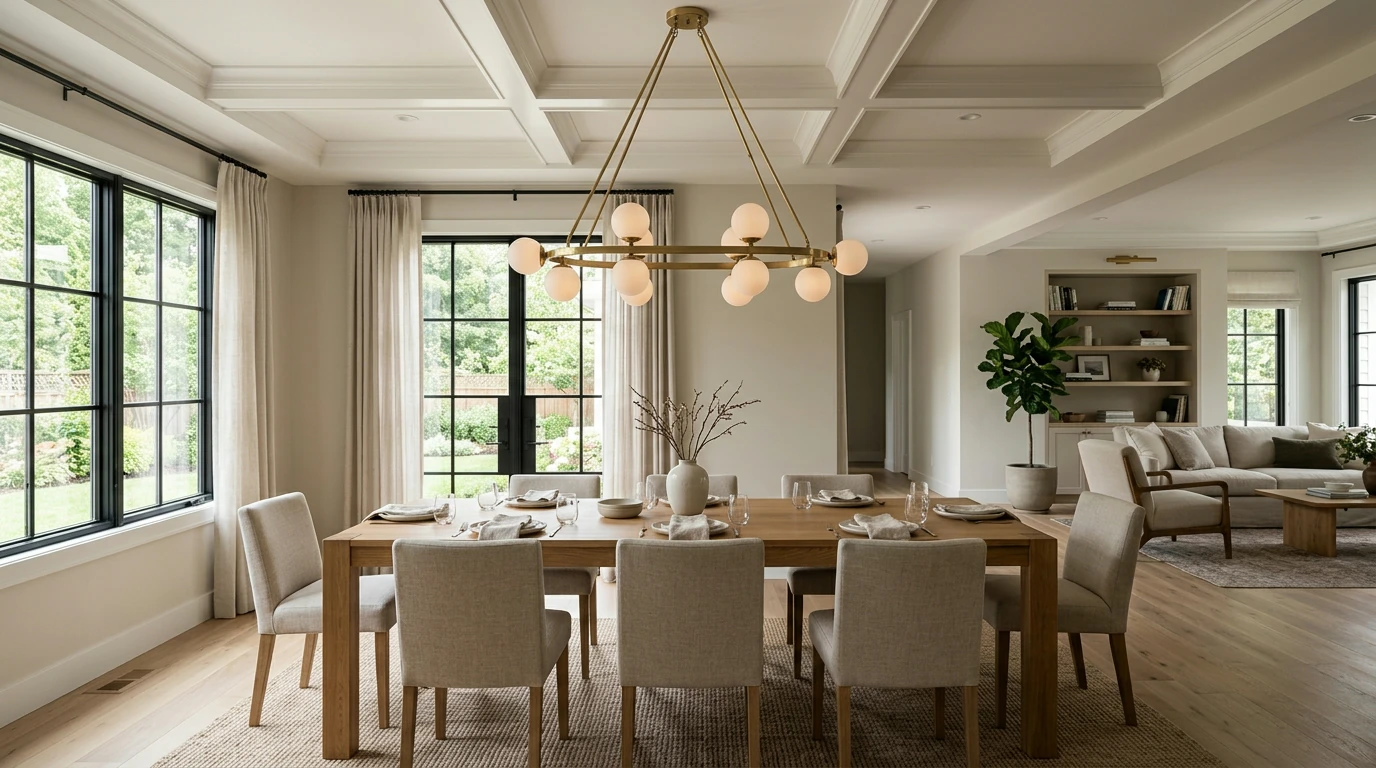
The dining chandelier should be sized to the table because that’s the visual “stage.” If your table is offset in an open plan, center the chandelier over the table—not over the room—so the lighting and the furniture read as one intentional zone.
- Leave breathing room: a chandelier diameter that stays comfortably inside the table edges looks balanced and helps reduce bump risk during seating.
- Rectangular tables: consider a linear chandelier, an oval silhouette, or a pair of smaller fixtures if one round piece feels short at the ends.
- Statement piece strategy: if the chandelier is bold, keep nearby décor calmer (simpler ceiling detail, restrained art placement, coordinated finishes).
- Control brightness: clear glass and crystal can feel bright; dimming makes the room adaptable from weekday meals to hosting.
If you want a high-impact focal point that naturally reads “larger” because of its sparkle and branching profile, our team often steers shoppers toward a sculptural crystal style like our Luxury Gold Crystal Branch Chandelier – Modern Ceiling Pendant Lighting, then pairs it with calmer supporting layers (recessed, sconces, or lamps) to keep the room balanced.
Foyer and staircase chandeliers: design for sightlines and vertical drama
Entries are all about first impressions and movement. The right chandelier fills the vertical volume without interrupting the lines of sight from the front door, through a hallway, or up a staircase.
Lighting design tips that keep the whole room balanced
For broader lighting planning guidance, we also recommend the fundamentals from the American Lighting Association (ALA) and best-practice references from the Illuminating Engineering Society (IES).
A printable checklist for confident measuring (digital download)
If you want a repeatable way to measure once and shop faster, our team put together a digital guide you can save or print: How to Choose Chandelier by Height and Scale Checklist (Digital Download). It walks you through room dimensions, ceiling height, tabletop height (when applicable), clearance zones, and a simple sizing flow so your final pick fits both the space and how you use it.
When a statement chandelier is the goal: styling notes for a luxe, modern look
FAQ
How to choose the right chandelier?
Start by defining the room’s purpose and the zone the chandelier should anchor, then choose a shape that matches what sits below (table or seating). Confirm the fixture has enough visual weight for the ceiling height, and finish by setting hang height and clearance plus a dimmer/bulb plan.
How do I choose the right size chandelier for my room?
Use room dimensions to get an initial diameter range, then refine by the surface or furniture grouping underneath (table or seating area). Adjust for visual weight, open-plan zoning, and verify proportion with a paper template and string mockup before you buy.
Recommended for you



Choosing a Smart Alarm Clock Kids Can Use
Oct 6, 2026
How to Spot Quiet Luxury: 5 Details That Matter
Oct 6, 2026













Leave a comment