


UNI-T UTx318 Thermal Monocular for Night Scanning Outdoors

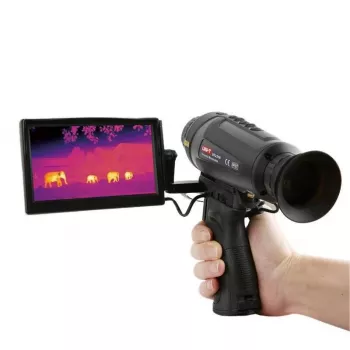
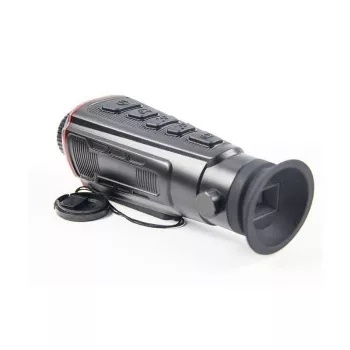
UNI-T UTx318 Thermal Imaging Monocular – Your Ultimate Outdoor Observation Tool
A thermal imaging monocular reveals heat signatures when visible light isn’t enough—after sunset, in light fog, or when brush and shadows hide movement. For scouting, safety checks, wildlife viewing, and certain search tasks, thermal adds a fast “spot-the-heat” advantage that helps you decide where to look next. The UNI-T UTx318 is built around practical outdoor handling: quick target detection, straightforward controls, and a field-ready form factor meant for longer sessions in changing conditions. For more guidance, see Intermittent myopic visual exposure triggers myopia ….
What a Thermal Imaging Monocular Adds to Outdoor Observation
Unlike night vision that depends on ambient light, thermal imaging detects differences in temperature. That means you’re not waiting for the moon, a headlamp, or a clear line of sight to notice what matters. For further reading, see Publications.
- Detects warm objects by heat patterns rather than visible light, making it effective at night and in low-contrast environments.
- Highlights living beings (people, wildlife) and recently used equipment (engines, camp gear) that retain heat.
- Supports safer navigation and situational awareness around campsites, trails, and remote property.
For a clear, authoritative primer on the basics, FLIR’s overview explains how thermal imaging converts infrared energy into a viewable image: FLIR — Thermal Imaging: How It Works. For background on infrared radiation as a concept, see Encyclopaedia Britannica — Infrared Radiation.
UNI-T UTx318 at a Glance
The UTx318 fits the “grab-and-scan” role that outdoor users often want: quick checks around camp, slow sweeps of tree lines, and a compact option for keeping in a jacket pocket or chest pouch.
- Purpose-built monocular format for one-handed scanning and quick spotting.
- Optimized for outdoor use cases such as wildlife observation, perimeter checks, and night navigation.
- Designed to balance detection capability with portability for pack-and-go trips.
Quick Decision Guide: Who the UTx318 Fits Best
| Scenario | Why Thermal Helps | What to Look For When Using It |
|---|---|---|
| Night wildlife viewing | Animals stand out clearly against cooler backgrounds | Scan slowly; use consistent panning to avoid missing stationary animals |
| Trail/camp safety checks | Find people/pets quickly without a flashlight | Check near brush lines and behind rocks/trees where shapes are hidden visually |
| Search tasks on property | Heat signatures can stand out even in cluttered scenes | Pause frequently to confirm targets; use a systematic grid sweep |
| Gear and vehicle checks | Heat can reveal abnormal hotspots or recently running parts | Compare symmetrical parts; look for unexpected warm areas |
Core Capabilities to Expect in the Field
Thermal monoculars are at their best when used as a fast detection tool: find the heat source first, then decide whether to approach, observe longer, or switch to visible light for confirmation.
- Thermal detection for spotting: identify heat sources quickly, then narrow in for confirmation.
- Multiple viewing modes/palettes (typical for thermal monoculars): switch based on background temperature and contrast.
- Digital zoom and on-screen overlays (common on this class of device): helpful for checking shapes at distance, with the tradeoff of reduced clarity at higher zoom.
A practical habit is to start with a wide scan at a comfortable palette/contrast, then re-check any “hotspot” from a steadier stance. If the background is warm (sun-baked rocks, roofs after sunset), change palettes and reduce contrast until the target edges separate from the scene.
Real-World Use Cases
- Camping and hiking: scan tree lines, riverbanks, and open fields before moving through an area in the dark.
- Wildlife observation: detect movement patterns without using bright light that can disturb animals.
- Home and property: quick nighttime perimeter checks; locate pets or people across yards or outbuildings.
- Boating and shoreline viewing (where permitted and safe): pick out warm targets against cooler water/land backgrounds.
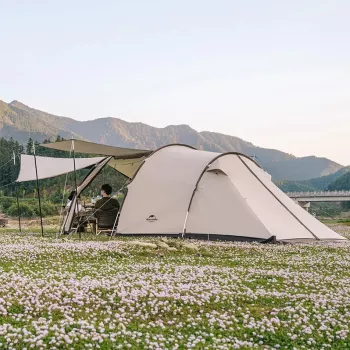
Thermal also pairs well with good shelter planning: set camp, then do a quick 360-degree scan before settling in. If a longer basecamp is the goal, a roomy shelter helps make those night checks less disruptive. Consider pairing thermal gear with a reliable tent like the 3-4 Person Outdoor Tunnel Tent.
Handling, Comfort, and Practical Setup
Thermal is most useful when it’s easy to reach. If it’s buried deep in a pack, it tends to stay there until it’s “needed,” which often means it’s used late rather than proactively.
- Carry strategy: keep it accessible (jacket pocket, chest pouch, or top lid of a pack) to encourage frequent scanning.
- Stability tips: use elbows-in posture; brace against a tree/vehicle for steadier viewing during long-distance checks.
- First-time setup checklist: charge fully, set brightness/contrast to a mid-range, test palettes outdoors, and practice quick target acquisition before a trip.
Getting the Most from Thermal Imaging
Care, Storage, and Field Readiness
Buying Notes: Fit, Value, and What to Verify
If the goal is a dedicated thermal option for outdoor scanning, the UNI-T UTx318 Thermal Imaging Monocular is a focused choice for observation, checks, and quick detection. For downtime at camp or travel nights, you can also add a lightweight activity like the Meaningful Conversation Starter Guide (Printable).
FAQ
Can a thermal monocular be used in complete darkness?
Yes. Thermal imaging does not rely on visible light, so it can work in total darkness as long as there’s enough temperature contrast between the target and the background.
Does thermal imaging work through glass or windows?
Typically no. Most standard glass blocks long-wave infrared, so a thermal monocular usually can’t see through windows; for accurate viewing, look from outdoors or through an open window when it’s safe.
What’s the best way to scan for wildlife without missing targets?
Use slow, overlapping sweeps and pause on any hotspot to confirm shape and movement. If the background is warm or visually cluttered, switch palettes and adjust contrast to make the animal’s outline stand out.
Recommended for you
Trending Home Décor Colors: 60–30–10 Checklist
Aug 24, 2026











Leave a comment