


Couples Conflict Workbook: Calm Arguments, Repair, Trust

When conflict becomes a pattern (and why it’s hard to stop)
Most recurring fights don’t start as “big problems.” They start as a familiar loop: one partner brings up a concern, the other hears criticism, and the conversation quickly turns into defensiveness, shutdown, or a back-and-forth about “tone” instead of the actual issue. Over time, couples can slip into a pursuer–withdrawer dynamic—one person pushes for resolution while the other backs away to stay calm—until both feel unheard.
Stress and fatigue make this harder. When the nervous system is overloaded, patience drops and listening becomes shallow. Even minor disappointments can register as urgent or personal, which is one reason conflict often spikes during busy seasons, sleep deprivation, or high work pressure. The American Psychological Association notes that stress affects both body and mind, shaping mood, attention, and reactivity in ways that can intensify everyday disagreements (APA: Stress effects on the body).
Then there’s the hidden cost of trying to “win.” Winning an argument may produce a short-lived sense of being right, but it usually costs connection—especially if the path there includes contempt, interruptions, or scorekeeping. The shift that changes everything is moving from “my point vs. your point” to a shared goal: “How do we solve this in a way that protects us?”
Structure is especially helpful when the same fight repeats, interruptions escalate, apologies don’t stick, or certain topics feel unsafe to bring up without backlash.
What a conflict-resolution workbook adds that talking alone may not
Many couples talk a lot; fewer couples practice a repeatable method. A workbook adds a consistent framework—prompts and steps that slow the pace, reduce guessing, and prevent derailments when emotions rise. Instead of hoping the conversation goes well, both partners know what comes next.
It also turns skills into small reps. Listening drills, emotion labeling, and repair attempts are easier to learn outside heated moments, then “plug in” during real conflict. That practice matters because once someone is emotionally flooded, they’re less able to take in new information or respond flexibly.
Another underrated benefit is shared language. Words like “pause,” “repair,” “trigger,” and “needs” become a shorthand that keeps discussions on track. The goal isn’t to sound clinical—it’s to be clear enough that both people feel safe participating.
Finally, printable format has practical advantages: it’s easy to revisit, highlight, write by hand, and use during scheduled check-ins when you’re both calm and willing.
Inside the printable workbook: exercises that create real change
A strong conflict-resolution workbook focuses on the building blocks of calmer arguments and faster repair.
Listening practice that actually reduces defensiveness
De-escalation tools that don’t feel like abandonment
Time-outs work best with a return plan: a specific time to resume, plus a calming routine (walk, breathing, water, shower) so the break is truly regulating. If anger is a frequent visitor, it helps to adopt evidence-based de-escalation habits like grounding or structured cool-downs (see NHS: How to manage anger).
Argument mapping for recurring fights
Repair and reconnection that rebuilds emotional safety
Repair isn’t just “sorry.” It’s a soft startup, acknowledgment of impact, and a specific request that gives your partner something doable. Couples who struggle with chronic criticism and defensiveness often recognize themselves in the Gottman Institute’s “Four Horsemen” patterns—and can use the matching antidotes as a guide for healthier communication (Gottman Institute: Four Horsemen and antidotes).
Trust rebuilding after conflict (trackable, not vague)
Progress tracking that keeps motivation alive
| Routine | Time needed | Best for | What to do |
|---|---|---|---|
| Weekly check-in | 20–30 min | Preventing buildup | Pick one topic, use the listening/reflection steps, end with one action item each |
| After an argument reset | 10–15 min | Repairing quickly | Pause, regulate, summarize each viewpoint, choose one repair statement, schedule follow-up if needed |
| Trigger review | 15–25 min | Recurring fights | Identify trigger, body cues, the meaning attached, and the underlying need; agree on a new signal or boundary |
| Trust micro-commitments | 5–10 min daily | Rebuilding reliability | Choose one small promise, define what “done” looks like, and review briefly at day’s end |
A simple script for hard conversations (use it word-for-word)
How to rebuild trust after repeated arguments
Making it stick: boundaries, pacing, and conflict rules that protect connection
Printable workbook option
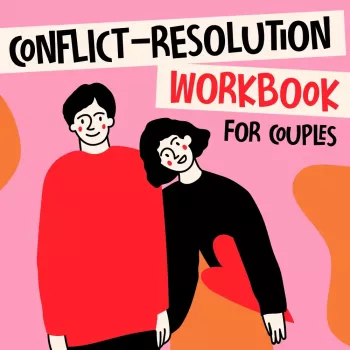
For couples who want structured, repeatable practice, the Conflict-Resolution Workbook for Couples | Printable Relationship Communication eBook | Improve Listening, Resolve Arguments, Rebuild Trust is designed for weekly check-ins, post-argument repair, and longer-term trust rebuilding routines.
If you want a lighter companion for staying emotionally connected outside conflict, pair it with the Meaningful Conversation Starter Guide | Printable Guide for Dating, Friendship & Networking | Deep Questions & Prompt Examples to build the habit of talking when things are already good—so difficult conversations feel less loaded.
FAQ
How long does it take to see results from a couples conflict workbook?
Many couples notice changes in escalation and repair within 2–4 weeks if they practice consistently in short sessions. Deeper trust rebuilding typically takes longer because it depends on repeated follow-through over time.
Can a workbook help if one partner shuts down during conflict?
Yes—workbooks support pacing with time-outs that include return plans, low-intensity check-ins, and written prompts that reduce pressure to “perform” in the moment. If shutdown is frequent or tied to fear or past trauma, professional support can help the process feel safer.
What if arguments keep repeating about the same topic?
Use trigger mapping to identify the underlying need and the moment the conversation derails, then choose one measurable agreement to test for a week. Avoid topic stacking so the issue gets resolved instead of expanding into every past frustration.
Recommended for you


Small Room Luxe: Layout Hacks That Feel High-End
Aug 19, 2026













Leave a comment